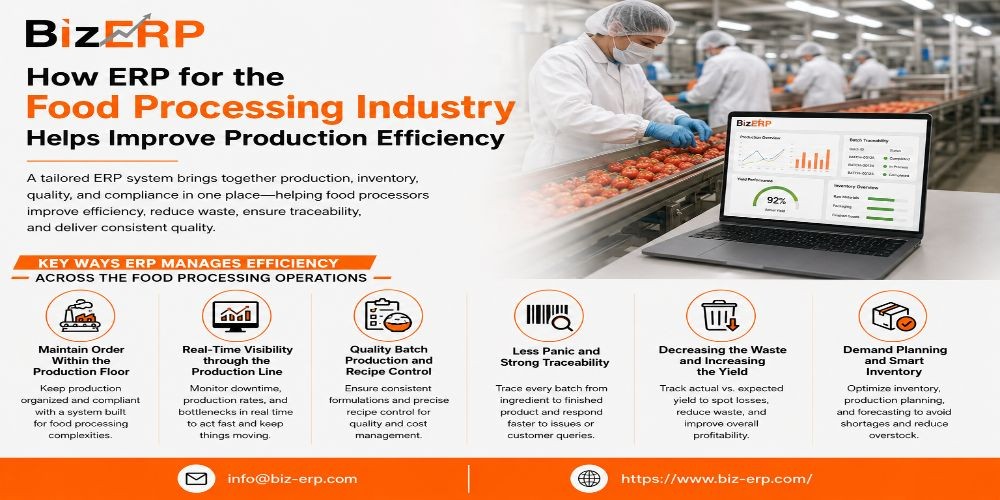
If batch records are scattered across spreadsheets or supervisors are constantly chasing you for yield figures, it creates a lot of stress. Maintaining compliance, quality, and output becomes difficult. Things can fall through the cracks instead of working together to deliver the desired result. This is exactly when you need an ERP for the food processing industry. It usually helps keep inventory, production, and compliance in check. It becomes possible to keep everything in one place.
Food manufacturing comes with many quirks. Strict traceability rules, perishability, and fluctuations in raw material quality create many issues. A generic ERP can’t handle these challenges. A system built specifically for the food processing industry can take the pressure off your shoulders. Instead of your operation, the software is customised to deal with any situation effectively.
One benefit of an ERP system is knowing exactly what’s happening on the production line. Instead of end-of-shift reports, supervisors can quickly see downtime, production rates, and potential bottlenecks as they happen. Small issues can be caught and corrected quickly. This makes it easier to avoid serious issues.
Formulation consistency is essential in food production. This helps manage cost and quality at the same time. A good ERP system tracks formulations and applications properly. Your production line stays under control. Every bit of information is recorded instead of staying only in someone’s mind.
If traceability is maintained from the ingredient stage to the completion stage, you do not have to guess anything. By tracingBy tracing a batch back, you can quickly identify when an issue arises with a supplier lot. In case the customer needs the information, data transfer can happen within minutes.
Most food is perishable in nature. For this reason, it directly impacts the business’s profitability. An ERP system can track actual yield against expected yield for every batch. It shows where your losses are creeping up. Here, the issue can be over-portioning, inefficient changeover between product lines, and spoilage.
Shortages of key ingredients or over-ordering ingredients with a shorter shelf life can lead to costly mistakes. An integrated inventory system, one of the most effective ERP features, makes it possible to understand stock levels. Understanding available stock helps create a better production schedule and a sales forecast.
Whenever you need an ERP for the food processing industry, you can get in touch with the experts from BizERP.