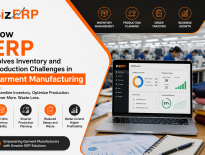

A garment business can have plenty of fabric, trims, and finished garments on paper, and despite that, struggle to find the right material when an order needs to move forward. One record says 500 metres are available, while the warehouse finds only 430. A particular size appears in stock, but the production team cannot locate it. These gaps may seem insignificant/ minor, but repeated stock mismatches can cause delays. This is where ERP for garments manufacturing can make stock information and maintenance easier.
Stock discrepancies do not appear out of the blue. They develop through several small errors occurring at different stages. For example, fabric may arrive at the facility in a particular quantity, but if the received amount is entered incorrectly, every later stock figure can be affected. The same happens when fabric moves through production without being recorded right.
Garment manufacturing involves different variations. A simple design may have different colours and sizes. When these details are recorded inconsistently, it becomes easy to confuse one stock item with another. Then there are returns, rejected pieces, damaged materials, and leftover fabric.
Manual records can help when the operations are small/ straightforward. As orders, suppliers, production stages and product variations increase, spreadsheets can be hard to maintain. This makes things difficult. In the end, a production manager may have one figure, the warehouse another, and the purchasing team a third. None of them may be deliberately wrong. They may simply be working from information updated at different times.
This creates a familiar problem: stock is ordered because the system suggests that something is running low, only for the warehouse to discover later that sufficient material was already available. For growing garment businesses, ERP for garments manufacturing can bring these stock movements into a more connected process.
Every stock movement should have a clear process: from incoming fabric through production consumption, through to finished garments, and/ or damaged goods. This helps maintain accurate information for each item rather than relying on broad descriptions. Colour, size, material type and other relevant details should be recorded consistently so that products don’t get mixed up.
Regular checks are equally important. Physical counts can reveal inconsistencies/ differences before small issues become major problems. Was material used without being entered? Was an item returned but not recorded? Was damaged stock left in the available quantity? When a mismatch happens, the cause has to be investigated, rather than simply changing the recorded quantity.
Accurate stock information doesn’t just help in knowing what sits on a warehouse shelf. It also affects purchasing, production planning, and meeting delivery schedules/ customer commitments. A connected system such as ERP for garments manufacturing helps businesses follow materials and finished goods through their different stages, giving decision-makers a clearer picture of what is genuinely available.
At BizERP, we understand that garment manufacturing involves much more than simply tracking finished products. That’s why our ERP solution is designed to bring different aspects of garment business processes together. The software offers a more organised way to manage the information behind everyday manufacturing decisions. In short, BizERP helps turn scattered business data into information that is easier to use. Connect with us for more info on how ERP can bring your garment manufacturing operations into better sync.