

Categories
Blog ERP for Garment Industry

Transforming Apparel Manufacturing with ERP Solutions

According to market research, the global apparel market is valued at $1.84 trillion in 2025, accounting for 1.63% of the world’s GDP. India is no less than behind. The revenue in the apparel market in India is projected to reach US$109.45 billion in 2025 and is anticipated to remain a high-growth market, potentially experiencing a 10-12% CAGR from 2024 to 2030.

Although it is one of the rapidly growing industries in India, it faces numerous issues. Apart from seasonality and fluctuating global demand, operating costs, and issues such as a lack of management and lower data security, productivity is also affected. If you own an apparel manufacturing unit and are facing similar issues, an enterprise resource planning or ERP for garments manufacturing can solve all these issues. 

What are the Main Issues Apparel Manufacturing Companies Face? 

Before exploring the solution, it is essential to identify the underlying issues first. As an owner, it helps you to get an overview of the real-time problems. 

Lack of Integration 

Apparel manufacturing is an integrated process. Every unit of the company must work together to meet deadlines and achieve the production standard. It includes departments such as fabric store, sampling, spreading and cutting, sewing, quality assurance, finishing and packaging, finance, and others. 

Supply Chain Inconsistency 

Supply chain disruption is one of the most common issues for apparel manufacturing units. Global supply chains face issues such as shipment delays and shortages of raw materials due to weather or other factors. 

Lower Data Safety 

Even after contributing a significant amount to the GDP (gross domestic product), the security of these units is often overlooked. Purchase orders, sales orders, manufacturing orders, fact sheets, industry-specific brochures, HR files, and employee data sheets are some of the documents that are often overlooked. It mainly occurs due to a lack of management and property security channels. 

Read more about Common Issues Faced By Garment Manufacturers

Faulty Inventory Management 

Inventory management is one of the most crucial tasks of garment manufacturing. You must comply with the trends. A single missing algorithm can not only result in monetary loss but also lower the brand’s visibility. However, due to incorrect market forecasting and a lack of trend tracking, companies often face faulty inventory management and substantial losses. Additionally, running out of stock when demand is high can harm customer satisfaction and lead to permanent business loss. 

Quality Issues 

Although quality is essential for every industry, it is particularly paramount in the garment and fashion sector. Issues with inconsistent sizes and material problems can negatively impact the brand image and erode user trust. 

Benefits of ERP for the Garment Industry

Only an updated technology, such as ERP for garments manufacturing, can effectively handle a rapidly growing industry like the garment sector. The latest software integrates all departments, including inventory, production, and finance, seamlessly and reduces the likelihood of errors. This effective integration also helps increase operational flow and contributes to fulfilling market demands. 

Streamlines the Operations 

From design to fabric sourcing, production and distribution, apparel manufacturing involves various steps. An ERP for the garment industry efficiently integrates all departments on a single platform, reducing the number of errors and paperwork. This not only enhances communication between teams but also improves the quality of production by reducing manual errors. 

Enhanced Inventory Management 

As stated, market trends and demands change rapidly, and your inventory must be ready to meet all the shifts in consumer preferences. An ERP solution tracks the storage and informs you about its availability. Additionally, it tracks reorders and provides valuable market forecasting, enabling you to stay prepared for potential market changes. 

Increased Control Over the Process 

The garment industry is volatile; even a small miscalculation can result in substantial losses. The ERP software helps in accurately comparing and tracking material and labour costs. The latest technology also offers detailed reports on profit margins and cost centres. This enables you to review your expenses and develop a more effective pricing strategy. 

Also Read: Ultimate Guide to Deal with the ERP for the Garment Industry

Quality Assurance 

An ERP solution is designed to track and ensure the quality of outputs. For this, the software evaluates each step of the production, sets benchmarks for the products, and records the results. It also informs in the event of any issues found and helps with faster corrections. 

Increase Customer Satisfaction 

The garment and fashion industry largely depends on customer satisfaction, and an ERP solution helps you achieve it. For this, the software responds to every query or issue raised by customers and offers unique solutions. Moreover, ERP provides tailored services by analysing their past purchasing behaviour and other traits. It helps in building a personal relationship with each client and strengthening the overall bond. 

Data-driven Decision 

One of the primary objectives of ERP is to facilitate data-driven decision-making. The software collects business data from various sources and presents it for analysis and review. This includes the names of best-selling products, lower-demand products, seasonal trends and demands, and metrics for different teams and regions. This deeper data helps inform the right actions and increase profitability. 

Promotes Sustainability 

The garment industry is one of the most contentious industries in terms of carbon emissions and water. Hence, integrating sustainable practices is no longer an option; it is the need of the hour, and ERP helps with it significantly. It tracks the carbon footprint, monitors energy consumption, and assesses waste amounts and recycling practices. To combat these issues, the software also helps in sourcing eco-friendly raw materials and trustworthy supply chains. 

The garment industry faces numerous challenges that necessitate customised solutions. The ERP for garment industry helps simplify operations and offers real-time data. The real-time data empowers you to take targeted measures to enhance operational efficiency and address internal issues. The latest technology also helps improve overall quality and increase profitability. Therefore, it is high time to integrate an ERP solution in your apparel manufacturing unit. 

Are you seeking a trustworthy vendor to provide ERP for garments manufacturing? Contact us. At BizERP, we offer ERP solutions specifically designed for the apparel industry. Our cloud-based end-to-end solution takes care of every department of your company and elevates the entire process. 

Contact us for an ERP solution now.
Categories
Blog ERP for Leather Industry

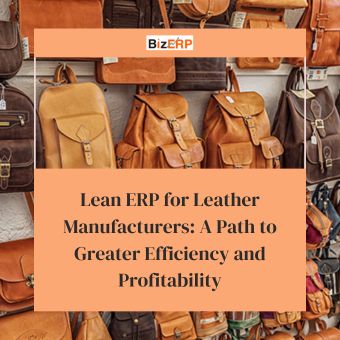
Lean ERP for Leather Manufacturers: A Path to Greater Efficiency and Profitability

Leather manufacturing is one of India’s most flourishing sectors. According to market research, the value added in the leather and related products market is projected to amount to US$2.53 billion in 2025. A compound annual growth rate of 3.45% is expected (CAGR 2025–2029). The manufacturing intensity in the leather and related Products market is projected to amount to 0.26% in 2025.

The rapid growth of this industry is not an unexpected occurrence. India’s leather and footwear exports showed strong growth in 2024, increasing by 25% to US$5.7 billion in the fiscal year 2024-25. However, the industry is highly fast-paced and filled with numerous challenges. These challenges include market changes, precise inventory management, and streamlined production processes. Introducing an ERP for leather manufacturing helps navigate these challenges effectively. 

What is Lean-based ERP (enterprise resource planning) for the Leather Manufacturing Industry? 

Data shows that the leather manufacturing industry is a high-demand industry. The ERP software for leather industry is working to simplify the process. This transformative software minimises waste, optimises inventory management, and improves supply chain processes.

If you are surprised by how the ERP software for leather manufacturing does this, it is the magic of real-time data. The technology offers data regarding dynamic market demands and maintains high-quality standards, driving operational excellence and profitability. 

For example, in the festive season, the demand for specific footwear increases rapidly. Knowing this helps in storing raw materials and planning labour before demand increases and meets consumer demand. On the other hand, you can optimise the storage of the other raw materials and reduce wastage. 

Why Do Leather Manufacturing Industries Need a Lean-based Manufacturing ERP System?

Integrated Operations for Enhanced Efficiency 

The leather ERP software solutions automate the entire operations in one platform. This latest technology also allows you to automate monotonous tasks and save manual labour. For instance, from procurement to production scheduling to inventory management, the software integrates all these processes. This integration reduces manual intervention, minimises errors, and ensures all departments work in harmony, thereby improving overall efficiency.

Better Inventory Management

The leather manufacturing industry struggles most with inventory management. With a variety of raw materials, semi-finished goods, and finished products available, maintaining optimal stock levels is essential. It prevents both overstocking and stockouts. The ERP for leather manufacturing provides real-time data and enhanced control over inventory. Practical forecasting aids in stock control and reduces the cost of carrying inventory.

Quality Enhancement 

Leather manufacturing companies strive for quality. A minor mistake in it can impact the sales rate and overall brand reputation. The ERP software for leather industry constantly monitors the quality of the raw materials and end products and informs regarding this. This constant monitoring enables you to identify defects, implement corrective actions, and ensure that only products meeting the quality standards are shipped to the customers.

Cost Optimisation 

Controlling expenses is crucial in the leather manufacturing industry, and for effective cost management, it is essential to monitor them. From sourcing raw materials to dispatching the results, leather ERP software solutions track every step of the operation. This real-time information enables you to identify sectors where expenses are high and can be reduced without compromising quality. 

Also Read: Few Ways ERP Software Can Benefit The Leather Industry

Improved Supply Chain Management

One of the key factors in determining a business’s success is its supply chain. An ERP software efficiently integrates critical supply chain data, such as consumer persona and sales data, to highlight possibilities and areas for improvement. This deeper insight opens a gateway for personalised products. This further helps to make better relationships, increase customer retention, and raise sales numbers. 

Maximises ROI 

Maximising the ROI (return on investment) is one of the primary goals of any business owner, and an ERP solution can help you achieve that. The streamlined process reduces costs and improves product quality, which directly impacts profitability. Naturally, it leads to maximising the ROI and strengthening the core of the organisation. 

Scalability and Flexibility

Leather manufacturing is one of the fastest-growing industries in India. Therefore, the importance of scalability and flexibility is paramount here. The software provides flexible, modular software that can adapt to business growth. It integrates crucial departments like production planning, inventory, supply chain, and finance. This promotes scalability and flexibility. Additionally, the ERP software solutions utilise the latest technologies, such as AI (artificial intelligence) and cloud-based deployment, to support every step of growth. 

Real Time Analytics 

For any industry, accessing real-time analytics is mandatory to gain a clear picture of the company’s situation. The ERP software for leather manufacturing provides real-time data and analytics on inventory levels, production statuses, sales performance, and financial health. You can also identify market trends with this software. Therefore, making an informative decision that aligns with the market demand and company stability becomes easier. 

Smoother Export Documentation

As a leather manufacturer, if you deal with international clients, a dedicated ERP software for the leather industry can be a boon for you. This would remove major bottlenecks in the export process through automatic documentation, ensuring that documents comply with international trade regulations and saving a significant amount of effort that goes into documentation. The technology seamlessly integrates with all expert documents, making global trade easier than ever. 

Integrating ERP software for the leather industry is not only about comfort, but also about making your company future-proof and opening the gates for growth. Don’t wait for the competition to leave you behind. Embrace lean-based leather manufacturing ERP today and transform your business for a brighter, more efficient future.

Connect with our ERP software providers for an updated ERP solution tailored to the needs of leather manufacturing companies. At Biz ERP, we provide a comprehensive and end-to-end solution for the leather industry, ensuring sustainable growth. 

Contact us for ERP software now.