
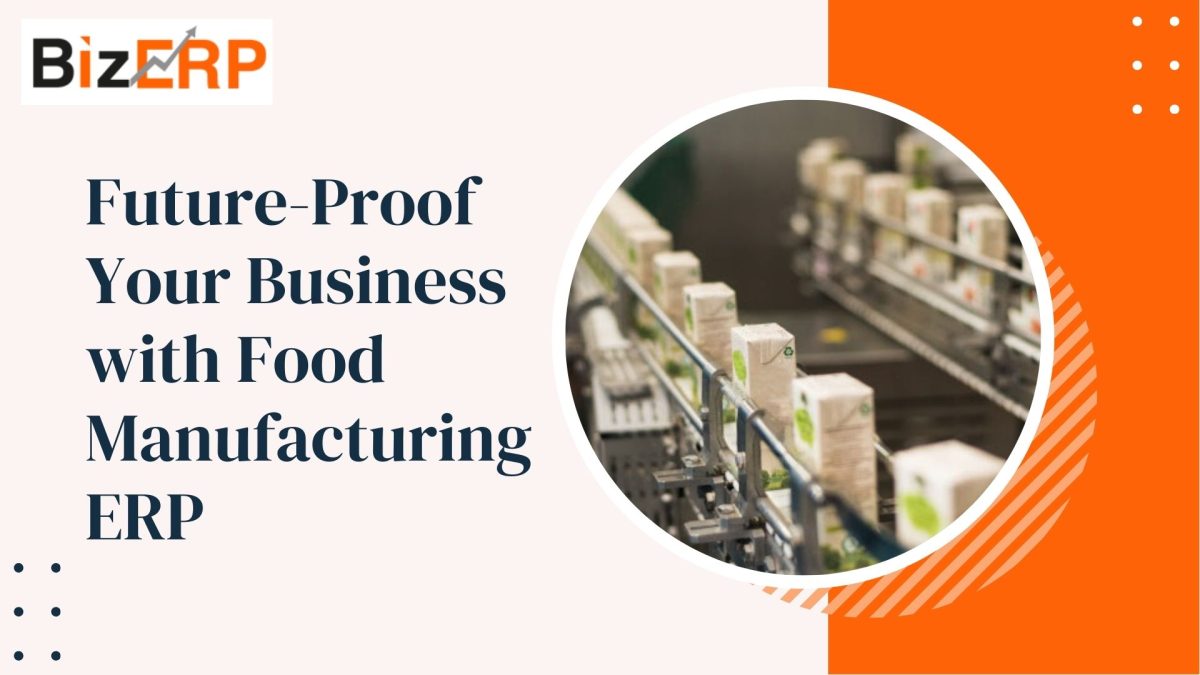
The food manufacturing industry is among the most ever-changing. From changing consumer demands to legal requirements to ensure consumer safety, this industry requires constant grinding. As an owner, you must adapt to the changes to ensure the highest profitability and future-proof the business to prevent future risks.
If you are struggling to keep pace with rapid change and streamlining operations, opt for an ERP for food processing industry now. A food manufacturing ERP is far more than a digital tool. It is a boon that offers a strategic approach backbone and strengthens every facet of production, quality, traceability, and business performance.
Why Do You Need ERP for Food Processing Industry?
The food processing industry is not like other industries. Perishable raw materials, short shelf lives, fluctuating supply chains, and strict safety regulations bring notable challenges to operations. Manual systems or outdated software can’t keep pace with the demand.
Integrating a dedicated food manufacturing ERP system allows you to leverage the benefits of a uniform digital platform. The platform integrates data from different departments. Therefore, you don’t need to juggle multiple disconnected tools, and manufacturers gain a single source of truth. You get everything from procurement and production to distribution and financials in one platform.
Also Read: How a Food Manufacturing ERP Ensures Long-Term Success
What are The Advantages of Food Processing ERP?
Higher Traceability and Strict Adherence To Food Safety Compliance
Traceability in the food industry is not an option; it is a necessity. It helps maintain the legal aspects of the business and meet client demands. A dedicated food manufacturing ERP software provides complete visibility across the supply chain.
From raw material sourcing to the dispatch of finished goods, you stay informed about every detail of the business. Here are some of the essential sides that you can trace with ERP for food processing industry:
Origin of the ingredients to ensure the best quality.
- Past performance of the supplier to gauge the trustworthiness.
- Batch data, production steps, and expiry dates to meet the highest market standards.
- Trace products forward and backwards within seconds to meet the changing demands.
These factors ensure the digital storage of ever-critical data rather than manual storage and offer greater transparency into operations. This becomes useful for audits, recalls, or regulatory compliance checks.
Enhance the Operational Efficiency By Lowering Waste Amount
The food processing or production industry heavily relies on valuable raw materials that spoil easily. Factors such as fluctuating demand, inconsistent ingredient quality, and unreliable machinery can lead to significant waste and losses.
Without the right technology, low storage time can increase downtime, cause overproduction, and lead to unnecessary waste. An ERP for food processing industry can change the scenario by following these techniques:
- An automated production planning and monitoring machine to gauge performance and productivity.
- Accurate labour allocation based on workload to reduce downtime.
- Forecasting maintenance requirements to prevent unexpected breakdowns.
An ERP for the food processing industry optimises workforce management and tracks machine performance to ensure its capability. The software also thoroughly assesses the machines’ maintenance needs and prevents operational disruptions.
Better Inventory and Supply Chain Control
Inventory is one of the key controllers of profitability in the food industry. It impacts cash flow, customer fulfilment, and product quality. An efficient food manufacturing ERP provides clear insight into inventory, tracks stock levels, and ensures batch rotation.
The latest technology also provides an overview of warehouse movements and manages them with exceptional accuracy. Here is a glimpse of how a food manufacturing ERP software does this:
- The software tracks the stock and refills the raw materials whenever needed. Monitor storage conditions by checking humidity and temperature to prevent waste.
- Tracks the finished goods and compares them with the raw materials to ensure productivity.
This planned inventory helps you meet market demands and retain clients. You can also stock raw materials to meet seasonal demand and prevent spoilage.
Optimise the Workforce To Enhance the Productivity
Optimising the workforce and employee capability is another deciding factor of profitability in the food industry. A food manufacturing ERP system uses artificial intelligence to optimise your workforce and ensure the best production. Here are some ways in which the software does this:
- The ERP automates routine, boring tasks to reduce manual labour in the system.
- Focus on innovation, process improvement and customer engagement to maximise the outcome quality.
- Plan the workforce based on their skills and automate scheduling.
- Provide AI-powered predictive analytics and real-time insights for informed decision-making.
For instance, the ERP for food processing industry provides the sales team with information on clients’ changing preferences by analysing order patterns. You can make tailored marketing strategies and align inventory levels.
High Quality Output For Maximising Client Satisfaction
Quality is non-negotiable in the food industry. Even a single bad product can ruin a brand’s image. In the worst scenario, it can lead to a legal feud and heavy penalties. A food manufacturing ERP can save from this in the following ways:
- It automates checkpoints to ensure the highest-quality outputs.
- Thoroughly check the ingredients and batches.
- Monitor the environment to ensure the standard of raw materials.
- Provide a detailed report on the quality of the deliverables.
Through thorough monitoring of the production life cycle, manufacturers ensure consistent excellence, maintaining quality and compliance with market standards.
Currently, the food industry is highly competitive, regulated, and innovation-driven. Incorporating ERP for the food processing industry helps you navigate these complexities more easily and enables long-term strategic growth. An ERP software system transforms the industry’s foundation and shapes the company’s future.
Are you planning to introduce food manufacturing ERP and struggling? We are here to take care of you. At Biz ERP, we offer efficient ERP solutions for businesses of all sizes. Our ERP solution is a master in inventory management, CRM, production management and quality management. With real-time insights and improved operational flow, our ERP assures increased profitability and staying on the competitive edge.